


| Mould on a wall indicates moisture, whether from condensation and inadequate ventilation, a hidden leak or water entry. The distinction matters: condensation-related surface mould is often addressed through ventilation or thermal insulation. If the moisture source or conditions persist, mould is likely to return until the cause is addressed. A suspected hidden building defect requires diagnostic investigation with non-invasive equipment. Health concerns or identification of a biological agent may require a different specialist. |
You see black marks on the wall. Or maybe whitish ones, like salt. There may be that strong smell that won't go away. And you think: should I use bleach? Or buy an anti-mould spray? Or repaint?
If you have already tried that and the mould returned, this article is for you. The cause has not yet been found.
What Mould on a Wall Is and Why It Appears
Mould is fungal growth encouraged by moisture and suitable material to feed on. Homes provide plenty of potential surfaces, including plaster, paint, wood and wallpaper.
Three conditions support mould growth:
- Sufficient available moisture — essential for active growth
- Temperature — typically between 10 and 35°C
- A surface — suitable material on a wall or floor
Controlling the source and the humidity conditions is the basic condition for drastically reducing the risk of it coming back, together with proper restoration and cleaning of the affected materials. That's also why anti-mould spray solves nothing in the long run: it treats the result, not the cause.
White or Black Mould: What Does the Colour Tell You?
Colour alone cannot identify the fungus or its health risk. White deposits on damp masonry may be salts rather than mould. The key question is where the moisture comes from.
| White salt deposits / efflorescence | Black or green fungal growth |
| Salts carried to the wall surface by moisture | A colony of fungus |
| Often on walls near ground level or in basements | Often in corners, around windows or in bathrooms |
| May indicate moisture from the ground or outside | May indicate condensation or a leak |
| Not a fungus, but a warning sign of moisture | May affect health, particularly with extensive growth |
| Important: Lasting treatment requires the moisture source to be addressed. Surface cleaning alone is like taking a painkiller for a headache: less pain does not necessarily mean the cause has gone. |

Condensation or a Leak? The Difference Changes the Solution
Different mechanisms can look similar. The wrong diagnosis leads to the wrong treatment and recurring mould.
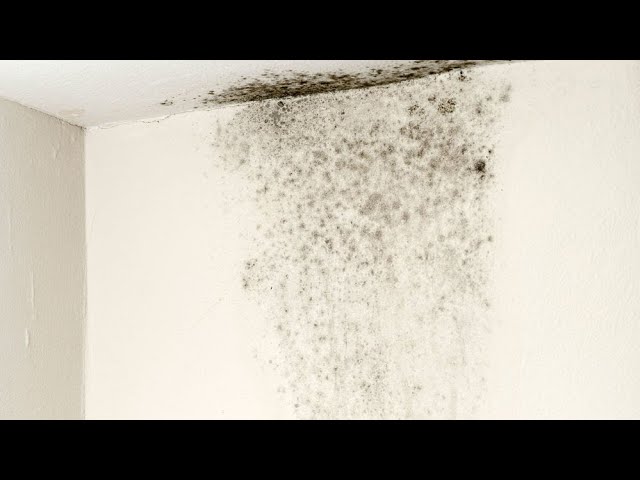
| Mould Associated with Condensation | Mould Associated with Hidden Moisture or a Leak |
| Often in external-wall corners and around windows | May appear in unexpected places and spread over time |
| Worse in winter (because of heating), minor in summer | May also appear in summer; season alone does not establish the cause |
| Ventilation and dehumidification can help | A dehumidifier can reduce the humidity of the air and help with drying, but it doesn't stop an active leak or water ingress |
| There may be no nearby water source | There may be a pipe or water entry behind the wall |
| Address ventilation and thermal insulation | Find and repair the underlying cause |

| A Real Case: A Kolonaki homeowner found mould low on a wall near the bathroom. Two coats of anti-mould paint failed. Could a thermal imaging camera not locate the hidden leak in the horizontal waste pipe? Not on its own: additional checks by a specialist engineer were needed. Result: One targeted opening and a pipe repair or replacement by the building’s plumber, without demolishing the whole wall. |
How to Tell What You Have: The Quickest Way to a Diagnosis
You can make some initial observations before calling anyone. These signs indicate what needs investigation, rather than providing a diagnosis on their own.
| Sign | Surface Only? | What it means |
| Mould only in corners and around windows | Yes | Possible condensation: improve ventilation |
| Mould spreading over time | No | Possible hidden moisture source: seek diagnosis |
| Mould returns after cleaning | No | The cause remains untreated: arrange an inspection |
| A mouldy smell without visible growth | No | Possible hidden growth behind a wall or beneath flooring |
| Peeling plaster or nearby blistering | No | Moisture within the wall: professional investigation needed |
| Mould appearing after rain | No | Possible water entry through cracks or failed waterproofing |
Which Specialist Do You Need — and Why a Decorator Comes Later
Wall mould is a moisture issue. Covering it does not locate or stop the source.
| Specialist | What it does | Does It Resolve Hidden Moisture? |
| Plumber | Repairs pipes once the fault is located | No: the leak first needs locating |
| Mycologist / biologist | Identifies the fungus | No — it doesn't solve the source of the damp |
| Decorator | Treats the surface finish | No: mould may return |
| Specialist engineer at IVM | Investigates moisture and leaks using thermal imaging and other professional equipment | Provides evidence-based diagnosis of hidden building defects |
The specialised engineer — not a technician — doesn't see behind the wall. They measure whatever the wall lets show on the surface and, with more than one instrument, narrow down where there is damp or a leak and how far it extends. The findings are given orally, on the spot; a technical report with an engineer's stamp (150 € + VAT) or an expert report for legal use (300 € + VAT) on request. With this diagnosis you know what is worth repairing and what isn't.
What to Do, Step by Step, If You Find Mould on a Wall
The order matters. Going straight to repairs without diagnosis risks spending money without solving the problem.
- Photograph and record it: Note the exact location, size and when you first noticed it.
- Check for nearby pipes: Consider bathrooms, kitchens, roofs and terraces. Where does the pipework run?
- Observe any link with rain or the season: Does it appear in winter or after heavy rain?
- If you want us to inspect, do not repaint yet: paint conceals the symptom and may blister again if moisture remains.
- Arrange diagnosis by a specialist engineer in non-invasive investigation: Without digging or destructive testing.
- Once the cause is established, repair it before relying on surface mould treatment.
| Take Care: Avoid spending on surface treatments before understanding the cause. A thermal imaging inspection by a plumber or technician costs 90–250 € (2026 prices), less than the fee of IVM's specialised engineer (410 € + VAT, with a customer satisfaction guarantee) — but the chance of a wrong diagnosis is very high. A partial or full renovation that didn't solve the problem costs many times the difference between IVM's specialised engineer and the plumber or tradesman with a thermal camera. |
IVM Finds the Cause of Mould Without Digging
Μαθαίνεις πού και γιατί υπάρχει το πρόβλημα, με στόχο τη λύση που θα κρατήσει, με το λιγότερο δυνατό κόστος. Η IVM δεν πουλά μπογιά, μόνωση ή επισκευές υδραυλικών. Δε βγάζουμε κέρδος από την επισκευή, άρα δεν έχουμε λόγο να βρούμε πρόβλημα που δεν υπάρχει, ούτε να καλύψουμε ανεπαρκή ή λάθος διάγνωση με εκτεταμένη επισκευή, που θα την πλήρωνες εσύ νομίζοντας ότι η δουλειά έγινε σωστά. Είναι εξειδικευμένη εταιρεία leak detection and damp diagnosis using professional thermal imaging and other specialist equipment.
With experience in damp diagnosis since 2011, IVM’s specialist engineers use non-invasive methods to investigate hidden leaks and moisture in walls, floors, roofs and ceilings, without breaking things open.
Your Frequently Asked Questions, Answered
Can wall mould affect health?
Health effects depend on the exposure and the person. Mould can affect the respiratory system, especially in children, older people and those with allergies or asthma. Extensive or hidden growth needs attention. The absence of obvious symptoms does not establish that exposure is harmless.
Why does mould return after cleaning?
Because the cause remains. Cleaning removes visible marks, but continuing moisture from poor ventilation, a hidden leak or water entry can allow mould to return within weeks.
What is the difference between white and black growth on a wall?
White deposits are often salts brought to the surface by moisture; black or green patches may be fungal growth. Colour alone is not a diagnosis. In both cases, investigate the underlying moisture.
Can I deal with mould myself?
A very small surface patch associated with poor ventilation may respond to suitable cleaning and lasting improvements in ventilation. Recurring mould, multiple affected areas or a suspected leak require professional diagnosis by an IVM specialist engineer.
Diagnosis costs for treating mould on a wall
The cost depends on both the cause and the damage already done. A small patch associated with poor ventilation may cost little to address. A hidden leak that has spread over a large area can cost much more. That is why early and reliable a diagnosis is the most economical move. IVM's investigation fee is 410 € + VAT (September 2026), with a customer satisfaction guarantee, for residential properties; for commercial premises and for homes over 180 m² we start from the same fee, and the specialised engineer will confirm it when they talk with you. And all of this, of course, before the appointment.
The fee
So that you know, before you break anything, what's wrong and which solution fits you, with a thorough non-invasive (non-destructive) check by a specialised engineer: the fee for water leak or damp detection is 410 € + VAT, with a customer satisfaction guarantee. That is: if for any reason your experience with IVM, from start to finish, didn't satisfy you, you ask for your money back, whenever you want (see our guarantee →). We explain the findings to you on the spot and discuss them together. We investigate one cause, wherever it takes us (what this means →). Your space stays as it was.
That's all for the visit. If there is an insurance policy, we contact its loss adjuster ourselves and send them whatever material they need to make use of the visit, at no extra charge. Only if you also want something in writing for your own reasons, which is optional, there is an extra fee: a technical report stamped by an engineer, 150 € + VAT, or an expert-witness report by a qualified engineer, 300 € + VAT (what each one includes →).
The fee applies from Voula to Kifisia, for homes up to 180 m². For business premises, homes over 180 m² and areas outside this zone, we start from the same fee and the specialised engineer will confirm it when they talk to you — before the appointment. Full details of our fees →
Tell us what you see or call us on 210 513 8501.