


| Rising damp in a stone wall is water that rises from the ground into the stone and the plaster through capillaries in the materials. Many old stone buildings have no modern horizontal damp-proof course at the base, or they handle moisture differently from a modern building. No surface fix (plaster, paint, dehumidifier) stops rising damp unless a professional diagnosis of its extent and source has been made first. |
If you have a stone wall and see damp low down, in the first 50 to 120 cm from the floor, you almost certainly already know it isn't easy to fix. You've seen it before. You re-plastered, painted, repainted. It came back.
It's not your fault. And it's not the plasterer's fault. Rising damp in stone walls is one of the most misunderstood phenomena in construction, precisely because most solutions treat the symptom, not the cause.
What Rising Damp Is, Without the Technical Terms
Rising damp is water travelling from the ground into walls. It does not come from rain or a pipe. It comes from below.
Ground moisture varies with soil, water levels, weather and drainage. Foundations are in contact with it. Properly designed modern buildings usually have waterproofing or barriers against capillary rise. Older buildings, especially stone ones, often lack that barrier, or it no longer works.
Water rises through wall materials like water entering a sugar cube touching a drink. This is capillary action. Stone, old plaster and old brick are porous and allow water to rise.
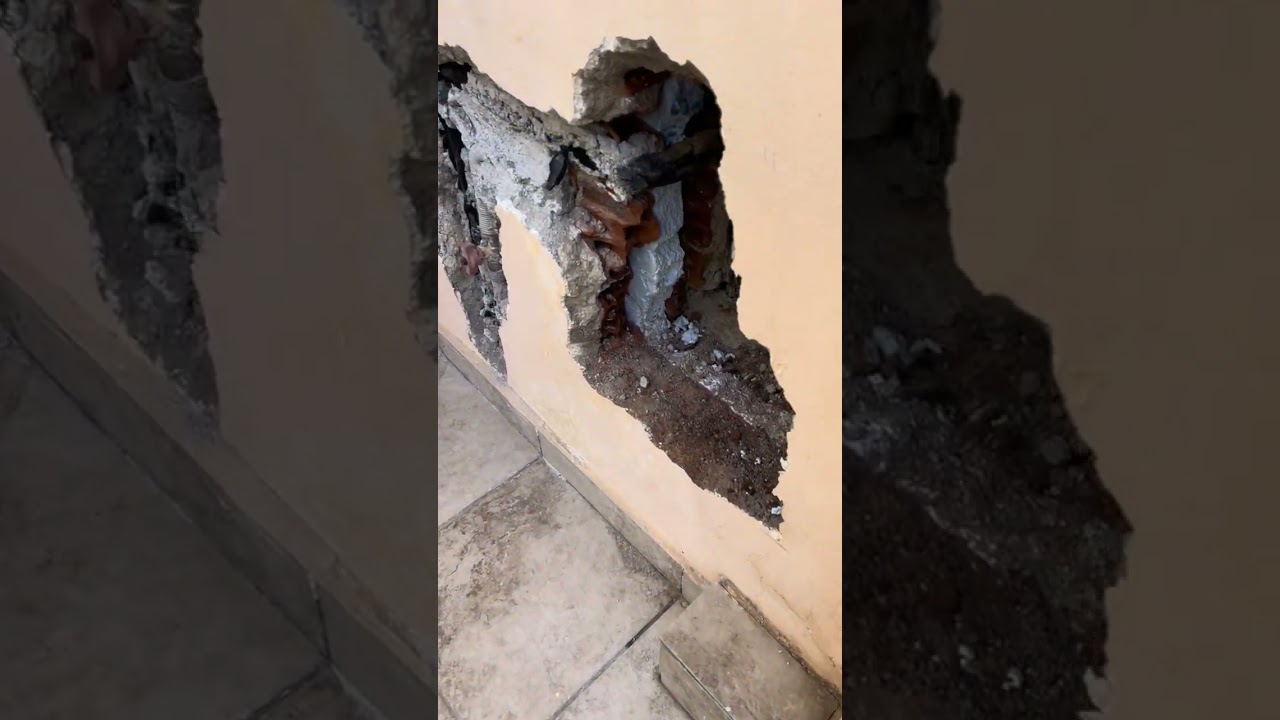
Why Stone Walls Are More Vulnerable Than Concrete or Brick
Stone walls were built to last, rather than with modern moisture protection in mind. That distinction matters.
| Modern concrete or brick building | Older stone building |
| A horizontal damp-proof barrier at the wall base | Usually there is no damp-proof layer — it was never built, or it has stopped working |
| Cement plaster, less porous | Older lime-cement or earth plaster, very porous |
| Uniform wall construction, making water movement harder | Lime joints between stones provide easier water paths |
| External insulation or a protective finish | Exposed external walls in contact with soil or vegetation |
What They Don't Tell You A stone wall absorbing ground moisture for years may be saturated, changing the behaviour of its materials. A quick surface treatment cannot reverse that. Before doing anything, establish how far the moisture has penetrated and how widespread it is. |
Recognising Rising Damp — The Signs
Rising damp in a stone wall has characteristic signs that set it apart from other causes. If you recognise the following, you're on the right track.
- It usually affects the lower part of the wall. Its height depends on materials, evaporation, salts, coatings and building conditions. A particular height alone is not a diagnostic criterion.
- The damp line is uneven, rising and falling rather than staying straight
- White salt deposits or efflorescence on the surface
- Plaster blisters, detaches or crumbles
- It worsens in winter or after rain as ground water levels rise
- It improves slightly in summer as the soil dries, but does not disappear
A Real Case An owner of an old stone house in Keramikos. They have re-plastered the same wall three times in 8 years. Each time the damp comes back within 12–18 months, at exactly the same height. They call IVM. With electronic moisture meters and targeted ground measurements, it is shown that the ground moisture is high all around and that there is nothing stopping it from rising. Result: for the first time the owner has a clear picture of what needs to be done — and what does NOT. |
Why the Usual Solutions Fail (And What That Means for You)
A solution applied without diagnosis is guesswork. Some guesses work for a while. They do not last.
| What People Usually Try | Why It Is Not Enough | What's Needed |
| Damp-resistant paint or coating | It seals the surface, but moisture pushes from within and the paint fails | Establish the depth of the moisture first |
| New plaster or plasterboard | The damp gets through the new materials too, if the source isn't stopped | Diagnose the source, then choose the right material |
| A room dehumidifier | Reduces air humidity, without addressing moisture inside the wall | Professional ground moisture investigation |
| External water-repellent treatment | If the base and foundations are not addressed, water finds another route | Measure the extent of moisture before choosing a method |
The danger in these buildings is not failure, but repeating mistakes that have not been diagnosed. Robert Mark, engineer at Princeton University and researcher of medieval and historic structures |
When DIY Is Enough — doing it yourself — and When It Is Not
There are things you can do before you call us. But rising damp in a stone wall isn't one of them — not without first knowing what you're dealing with.
| Scenario | Is DIY enough? | What you need |
| Surface mould after showering, with low air humidity | Yes | Better ventilation and a dehumidifier |
| Damp along the bottom of a whole wall, regardless of season | No | Possible rising damp; ground measurements are needed |
| Salt deposits on a stone wall | No | A sign of possible rising damp; diagnose before treating |
| Blisters in the plaster, low down | No | Moisture is pushing from within |
| Water visibly dripping from a particular point | Yes | Possible pipe leak; call a plumber |
| External-wall damp only after rain | No | Rain penetration rather than rising damp; inspect the sealing |
How Proper Diagnosis Works — and Why It Comes First
There is no right treatment without a right diagnosis. That applies to buildings as well as health.
A rising-damp investigation does not itself repair the problem. It establishes:
- How widespread the wall moisture is and where it decreases
- Whether it comes from the ground or another source, such as a leak, rain or condensation
- Which parts of the wall are most affected
- Whether the pattern fits rising damp or something else
With this information, you and your tradesman know what to do and don't waste money on solutions that don't fit this particular problem.
What IVM Uses for the Check — How We Differ from Other «Specialists» – Electronic moisture meters with pins or non-contact sensing map and compare moisture distribution. Depending on the technology and material, readings may be relative. The area influenced by a measurement must not be confused with an exact depth measurement. – Groundmoisture measuring instruments: ground readings add information about conditions around the building. They do not, on their own, prove that moisture in the wall comes from capillary rise. – Thermal camera: picks up temperature differences that give away wet zones (because of evaporation) inside the wall, even where nothing shows on the surface. – Combined analysis: we relate findings to the symptoms you see, building an explanation rather than guessing. IVM doesn't stop at the thermal camera alone. A useful supporting tool, thermal imaging is now widely used by non-specialists. It is valuable within a combined approach, but no single instrument makes the diagnosis. |
Why a Specialist Engineer — Rather Than a Plumber or Plasterer
A plumber looks for dripping pipes. A plasterer repairs surfaces. Neither diagnoses rising damp in a stone building.
| Plumber / Plasterer | Specialist Diagnostic Engineer (IVM) |
| Checks visible faults in pipes and surfaces | Measures moisture in materials and soil with specialist equipment |
| Recommends a solution based on experience and judgement | Provides an evidence-based assessment |
| Doesn't use moisture meters or ground equipment | Uses professional thermal imaging, moisture meters, ground instruments and more |
| Does not document the problem | Gives a detailed finding — you know what's going on |
Παίρνεις διάγνωση από κάποιον που δεν κερδίζει τίποτα από την επισκευή. Δεν κάνουμε επισκευές, άρα δεν έχουμε λόγο να βρούμε πρόβλημα που δεν υπάρχει, ούτε να καλύψουμε ανεπαρκή ή λάθος διάγνωση με εκτεταμένη επισκευή, που θα την πλήρωνες εσύ νομίζοντας ότι η δουλειά έγινε σωστά. Η διερεύνηση γίνεται από εξειδικευμένο μηχανικό, με επαγγελματική θερμοκάμερα και λοιπό εξειδικευμένο επαγγελματικό εξοπλισμό μη επεμβατικού ελέγχου, χωρίς να σπάσει τίποτα για να ψάξει. Τα όργανα όμως τα αγοράζει όποιος θέλει· το να ξέρεις τί σου δείχνουν θέλει χρόνια. Η IVM έχει 15 χρόνια εμπειρίας σε διάγνωση υγρασίας και εντοπισμό διαρροών σε κατοικίες και εμπορικά κτίρια (από το 2011), σχεδόν 20 σε εντοπισμό διαρροών και μη επεμβατική επιθεώρηση ηλεκτρομηχανολογικού εξοπλισμού στη βιομηχανία (από το 2006) και πάνω από 30 σε επισκευές και κατασκευές επιστημονικών οργάνων (από το 1994). Οι εξειδικευμένοι μηχανικοί της εκπαιδεύονται στις αρχές της θερμοδυναμικής και της ροής υγρασίας στα υλικά — γνώση που κάνει τη διαφορά όταν μιλάμε για παλιά πέτρινα κτίρια με πολύπλοκη συμπεριφορά υγρασίας.
Do you have rising damp, or are you unsure why your wall is wet?
What to Do, Step by Step, If You Have Rising Damp in a Stone Wall
The order matters. If you skip the first step, the third won't work.
- Stop painting or replastering — each new layer conceals the problem without solving it and makes diagnosis harder.
- Photograph the damp areas and date the images. Watch for seasonal changes.
- Call a specialist engineer for a ground and wall moisture investigation.
- Ask for an expert report only if you have to go to court, by a loss-adjuster engineer, on request (300 € + VAT). In every other case, the oral conclusion at the end of the visit is enough.
- Only then choose, with your tradesperson, the right treatment, based on diagnosis rather than guesswork.
To keep up with our work and get relevant advice…
Your Frequently Asked Questions, Answered
Does rising damp behave differently in stone, brick and concrete?
Yes, considerably. Stone walls are uneven, with stones of differing porosity and lime joints that channel water. Moisture spreads irregularly and may rise higher than in uniform brickwork, making assessment without measurements harder.
Can it be solved without disturbing the wall?
It depends on the extent and the cause — and that's exactly what the diagnostic check shows you. In some cases there are methods with minimal intervention. In others the wall needs to be opened. Without knowing what you're dealing with, you can't decide.
Can rising damp affect health?
Persistent indoor damp encourages mould. The World Health Organization associates indoor damp and mould with increased respiratory symptoms and infections, particularly among children, older people and those with allergies.
Do I need to prepare anything?
No special preparation is needed. The engineer needs access to affected areas. If furniture is in the way, we can move it.
What do I get at the end of the check?
We explain the measurements and findings verbally on site: where moisture exists and whether the pattern fits rising damp or another source. That helps you plan confidently rather than experiment. We discuss the next steps together, because even with the same diagnosis, the solution depends on your budget, priorities and habits.
For the full picture, see our damp diagnosis service, particularly if your home is older.
The fee
So that you know, before you break anything, what's wrong and which solution fits you, with a thorough non-invasive (non-destructive) check by a specialised engineer: the fee for water leak or damp detection is 410 € + VAT, with a customer satisfaction guarantee. That is: if for any reason your experience with IVM, from start to finish, didn't satisfy you, you ask for your money back, whenever you want (see our guarantee →). We explain the findings to you on the spot and discuss them together. We investigate one cause, wherever it takes us (what this means →). Your space stays as it was.
That's all for the visit. If there is an insurance policy, we contact its loss adjuster ourselves and send them whatever material they need to make use of the visit, at no extra charge. Only if you also want something in writing for your own reasons, which is optional, there is an extra fee: a technical report stamped by an engineer, 150 € + VAT, or an expert-witness report by a qualified engineer, 300 € + VAT (what each one includes →).
The fee applies from Voula to Kifisia, for homes up to 180 m². For business premises, homes over 180 m² and areas outside this zone, we start from the same fee and the specialised engineer will confirm it when they talk to you — before the appointment. Full details of our fees →
Tell us what you see or call us on 210 513 8501.